Welcome to CATS, Cuenca Alfonso Time Series Station
Home
WELCOME TO CUENCA ALFONSO
TIME-SERIES STATION (CATS)
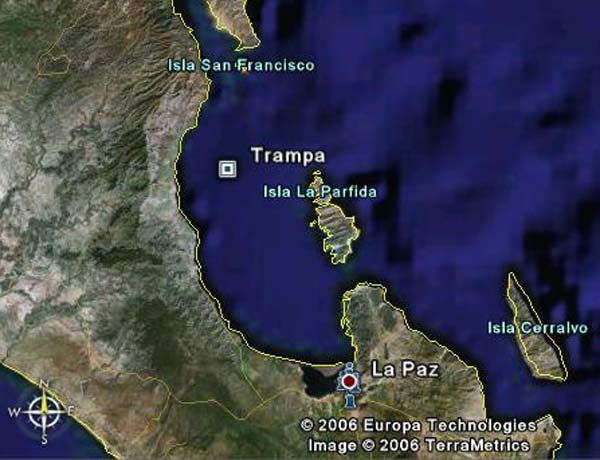
Cuenca Alfonso is a 410m-deep basin occupying the northern half of Bahía de La Paz (“La Paz Bay”), the largest embayment on the western margin of the Gulf of California. Based upon a limited number of short-term studies and abundance of marine life, the bay is considered to be highly productive.
Cuenca Alfonso
About
HOLISTIC APPROACH
Cuenca Alfonso is a 410m-deep basin occupying the northern half of Bahía de La Paz (“La Paz Bay”), the largest embayment on the western margin of the Gulf of California. Based upon a limited number of short-term studies and abundance of marine life, the bay is considered to be highly productive.
In this semi-arid climate, rainfall is scarce and episodic, mainly in late summer and fall and supports no permanent rivers. In fall and winter strong NW winds predominate and the surface layer is deeply mixed, while intense heating, evaporation and weak south winds in summer establish strong stratification. A 300m-deep sill at the northern entrance to the bay permits exchange with the open Gulf and the entry of Oxygen Minimum Zone water. Seasonal shifts to the north of more tropical Pacific Ocean waters may also affect the bay. Time-series sediment trap monitoring in Cuenca Alfonso began in 2002, supplemented by water column sampling on a 3-6 month basis. The initial results have already shown that the strong seasonal shifts detected in Guaymas Basin in the central Gulf of California – high diatom fluxes in winter and terrigenous sedimentation in summer – is not the case in BahÃa de La Paz. CaCO3 deposition is unusually strong in Cuenca Alfonso and dominates over that of biogenic silica, and terrigenous sedimentation is twice as important as in Guaymas. In 2006, the program was enhanced to include monthly sampling of the surface waters from a small boat, the installation of a moored Acoustic Doppler Current Profiler at the northern sill and the initiation of a marine mammal observation study. The hope is to develop a holistic view of the ecosystem. There are many parameters for which sediment trap samples can be analyzed (not to speak of water column simples and, soon we hope, sediment cores). Our research group is limited and we would welcome help from those investigators or graduate students who would be interested in collaborating.
Mooring Set-up
News
Contact
DR. RAFAEL CERVANTES DUARTE
Departamento de Oceanología
Centro Interdisciplinario de Ciencias Marinas
Av. Instituto Politécnico Nacional s/n
Playa Palo de Santa Rita
Apartado Postal 592, La Paz, Baja California Sur, 23096
Tel: (52)-(612)-12-30350 Ext. 81642
E-mail: rcervan@ipn.mx
DRA. MARA Y. CORTES MARTÍNEZ
Departamento de Ciencias de la Tierra
Universidad Autónoma de Baja California Sur
Carretera al Sur km. 5.5
Apartado Postal 19-B, La Paz, Baja California Sur, 23080
Tel: (52)-(612)-123-8800 Ext. 4270
E-mail: mycortes@uabcs.mx